ULEY TREES AND MEADOWS
Since 2022, UTM has been involved in a variety of nature-based projects in Uley, such as: tree planting and creating biodiversity islands and corridors.
The Uley Village Ramble that took place in July was a big success, more than 60 taking part, absorbing ideas for Wildlife Friendly gardening, and enjoying Cream Tea and Pimms in the lovely Walled Garden at the finish. There was much interest an enthusiasm, and some valuable funds were also raised.
TREE PLANTING
Gloucester County Council (GCC) has a project to plant 1 million trees in Gloucestershire by 2030.
They are looking for local volunteers to plant tree saplings in their local areas – the saplings, plus advice, are provided by GCC using funds from the Forestry Commission and central government. The volunteers must commit to look after the saplings for five years after planting (protect from damage by animals and ensure sufficient water during dry periods) to ensure 85% eventual survival.
UTM members identified several suitable sites for tree planting in Uley, applied for trees and supports from GCC and organised a group of volunteers to get them in the ground.
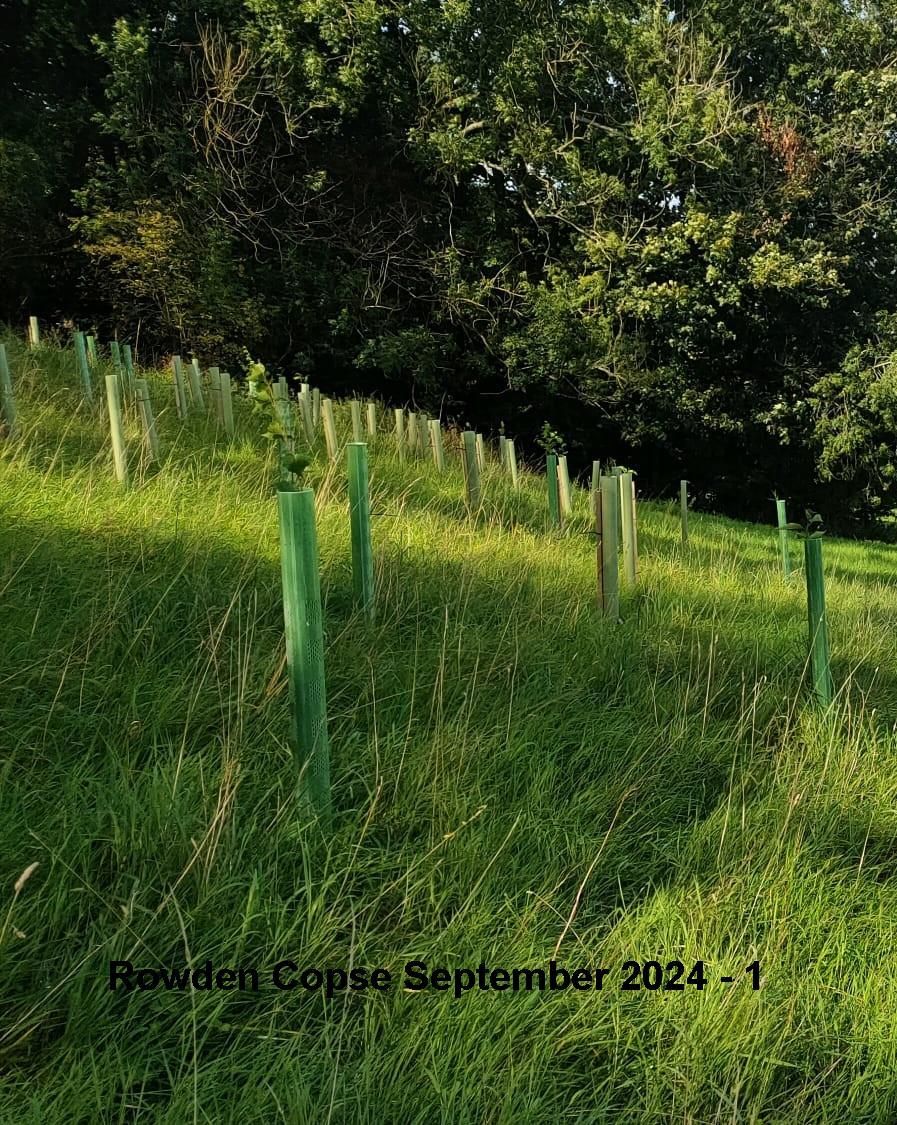
Rowden Copse
In February 2023, a group of volunteers planted 100 tree saplings in a field on Elcombe Farm in Uley; with the enthusiastic support of the farmer who owns the field. Some children from Uley School planted the first few.
Mill Farm and Blacknest
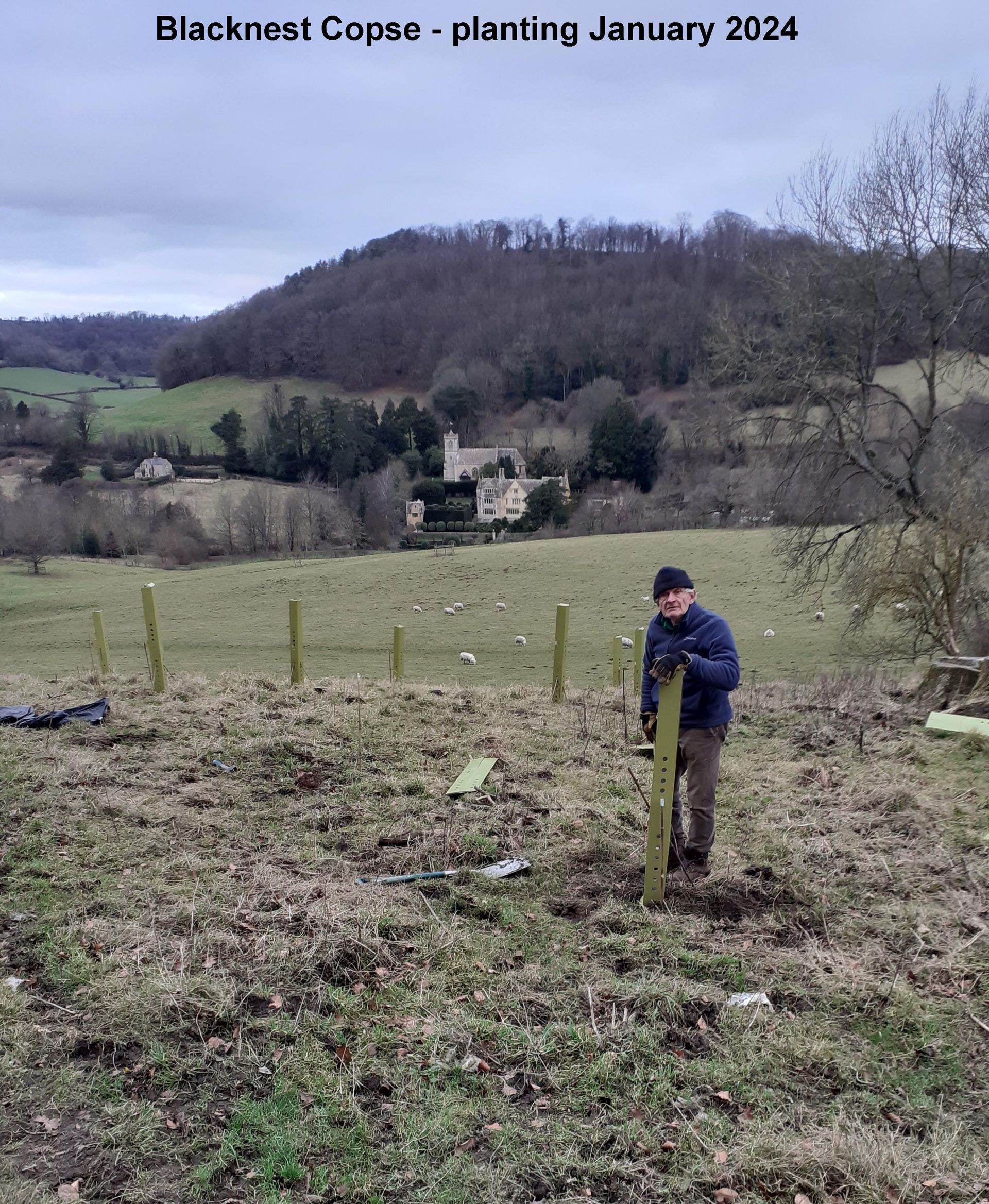
In January 2024 a group of volunteers planted 50 tree saplings in a space on Mill Farm between Uley and Dursley, and 50 in a space on Owlpen Manor Estate - with the support of the respective landowners. The species were Oak, Silver Birch, Sweet Chestnut and Black Alder.
Uley Common
(West Hill Common)
________
In February 2025 a group of volunteers began to manage this 0.3 ha remnant of a once larger Common for wild flowers - part of the Biodiversity Policy and Plan of the Parish Council adopted in 2024.
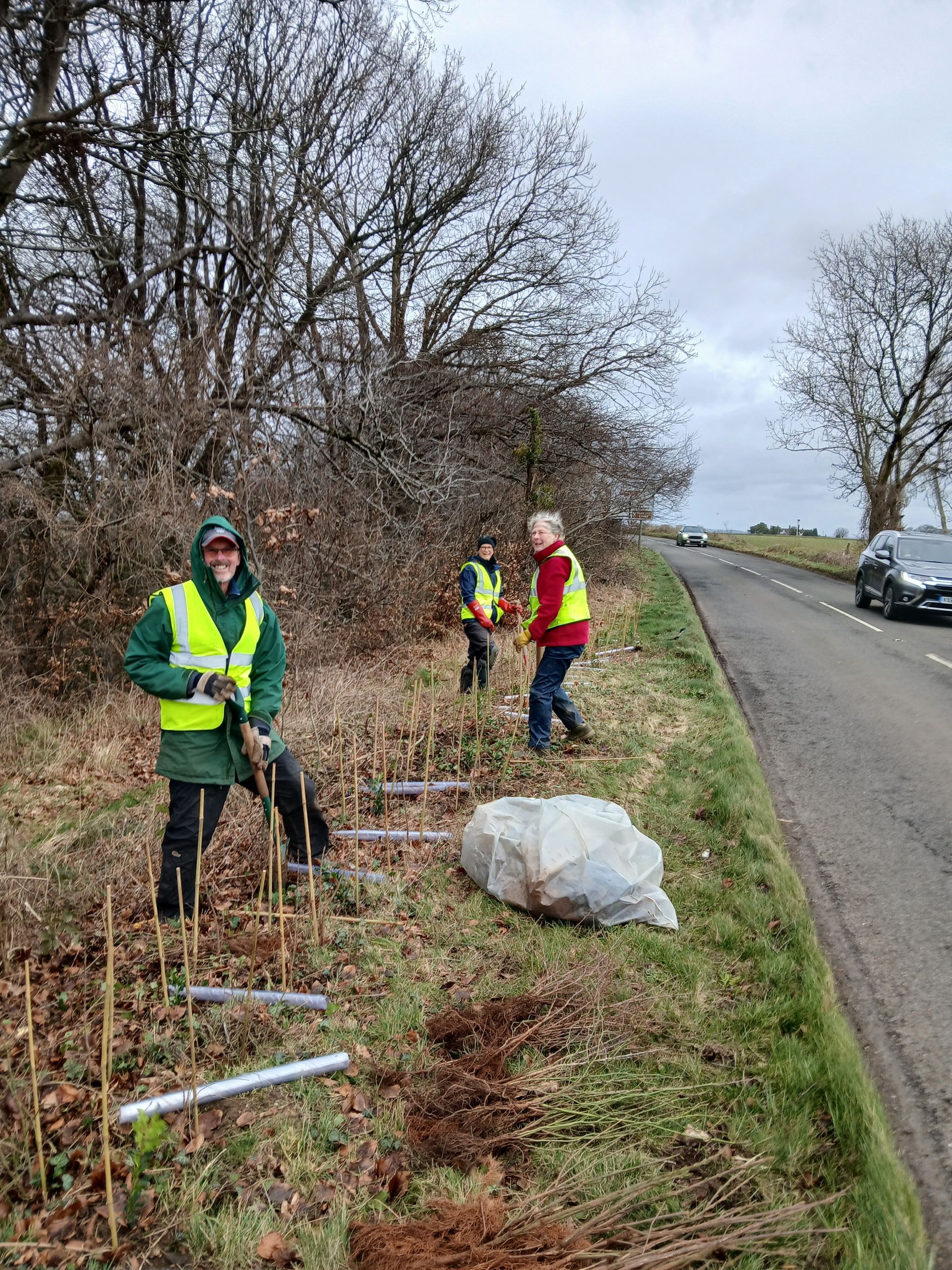
Along one edge beside the main road a hedge of 300 mixed species saplings was planted, and regularly watered through the following dry summer.
A Diary report is here
Shadwell
Playing Field
_______
In December 2025 a number of Tree saplings were planted around the edge of the Playing Field. Some of these were to commemorate men of Uley who gave their lives during WW2 - renewing trees that have died since the original ones were dedicated in 1990.
A Diary report is
here
More
The Memorial Trees were planted in 1990. Thirteen trees were planted in memory of the 13 local Servicemen who were killed in the 2nd World War. There was a Service of Dedication on the playing field held by the St Giles vicar, Rev Curwen Rawlinson when he blessed each of the trees.
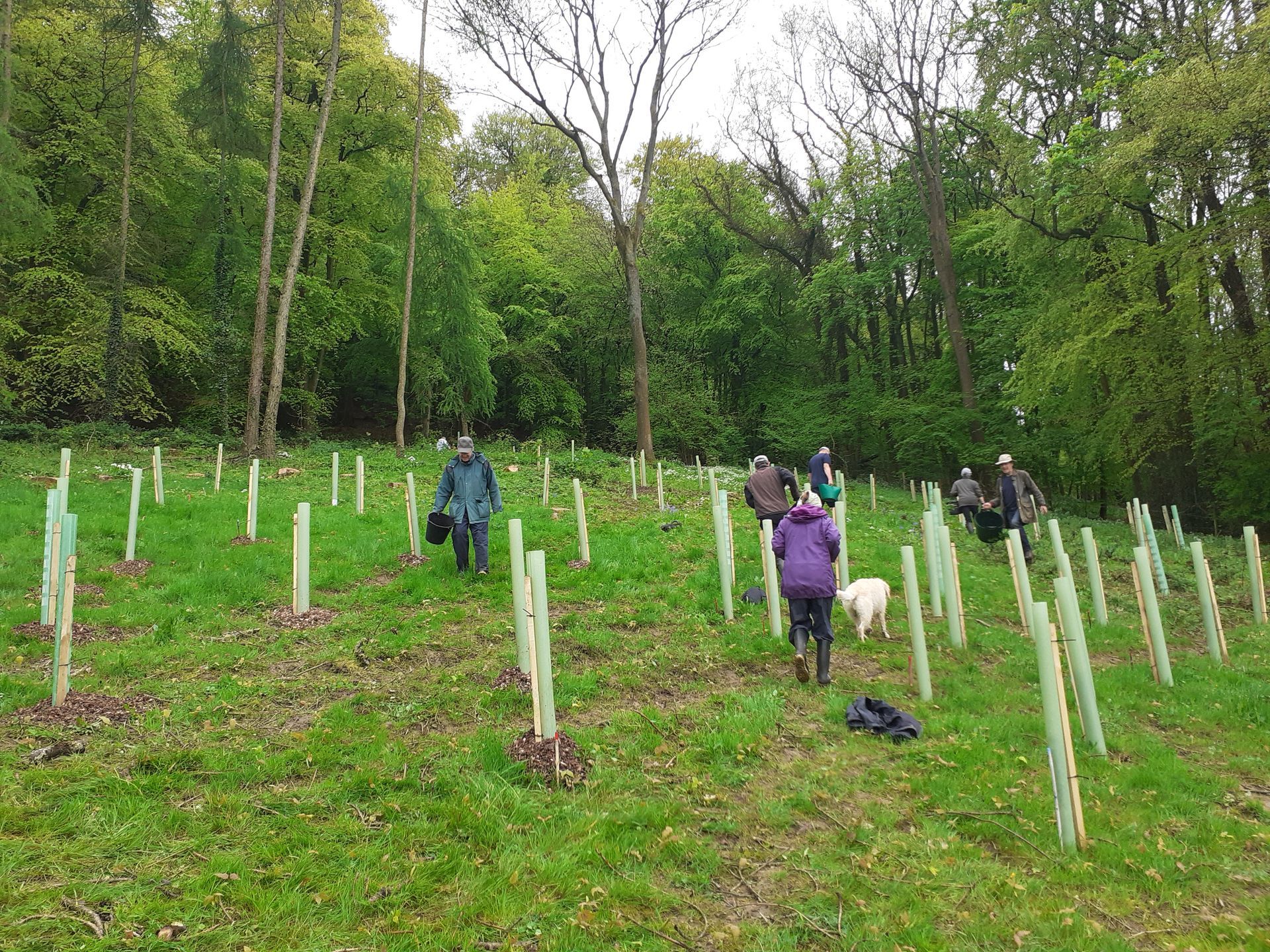
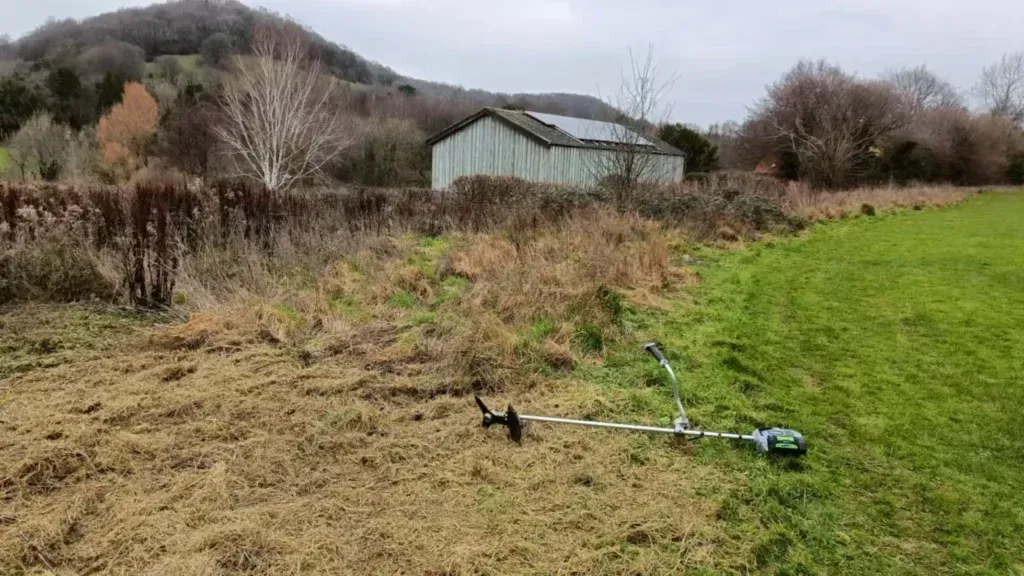
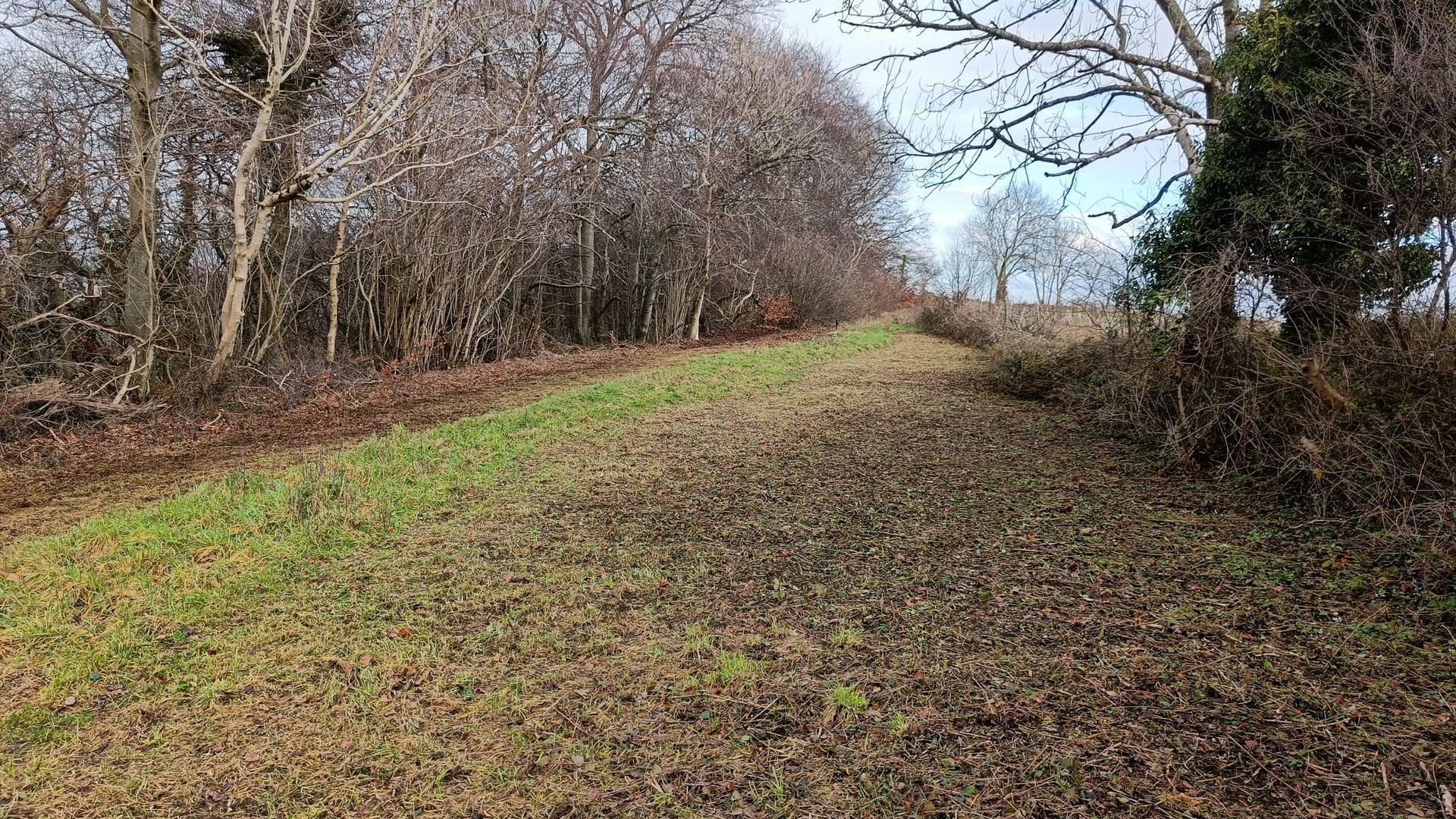
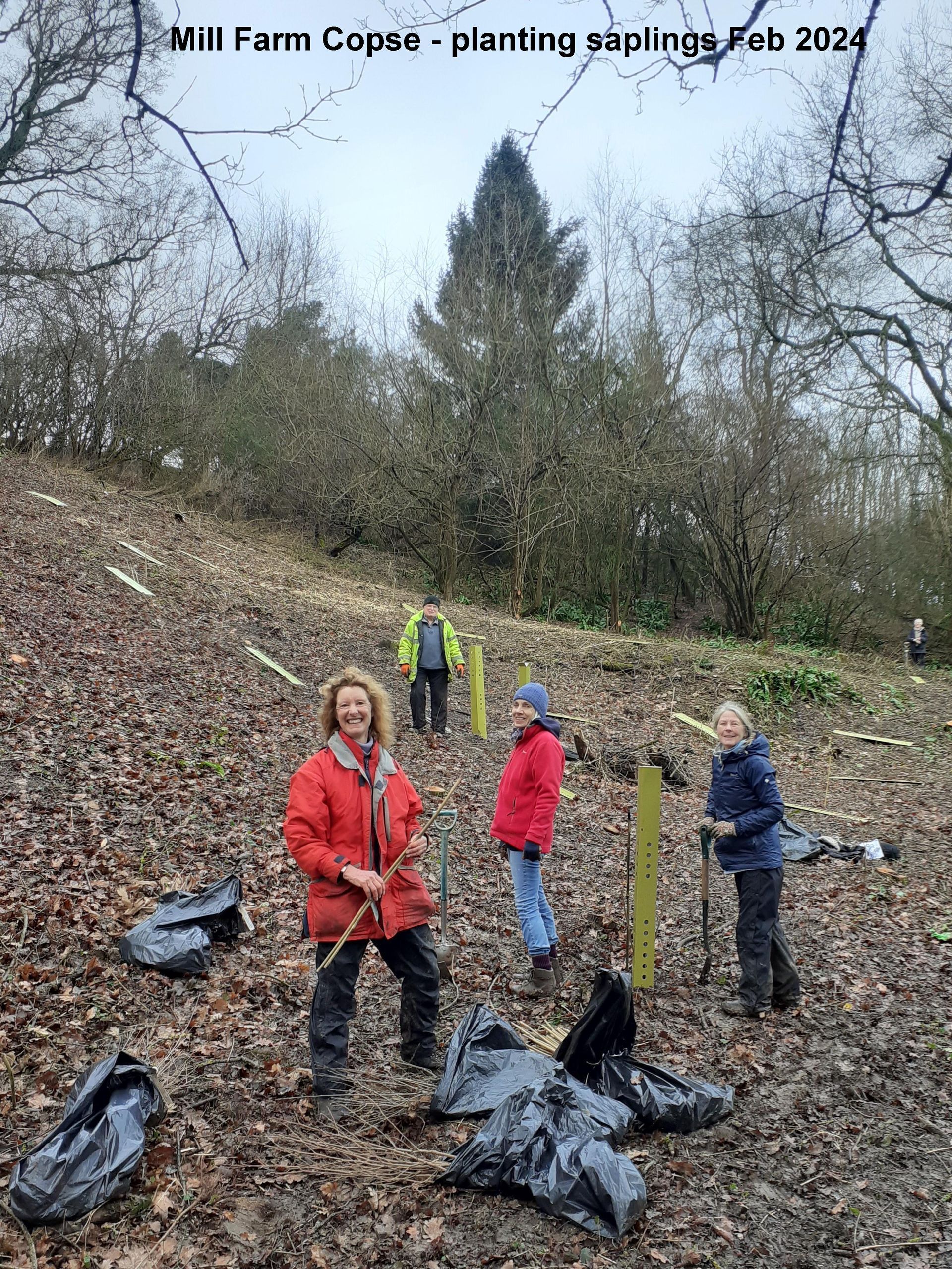
Planting Mill Farm Copse 2024
This is the text area for this paragraph. To change it, simply click and start typing.
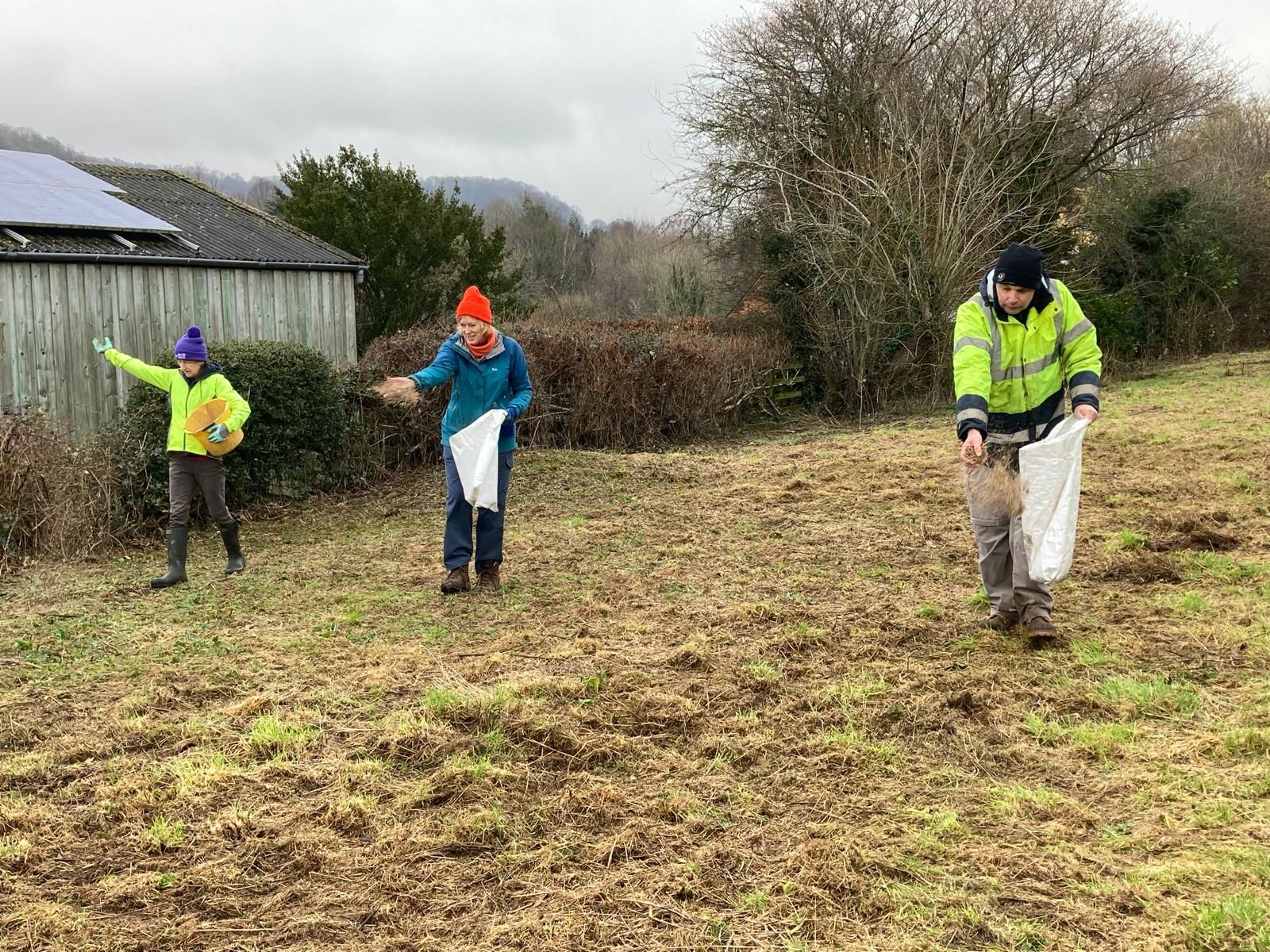
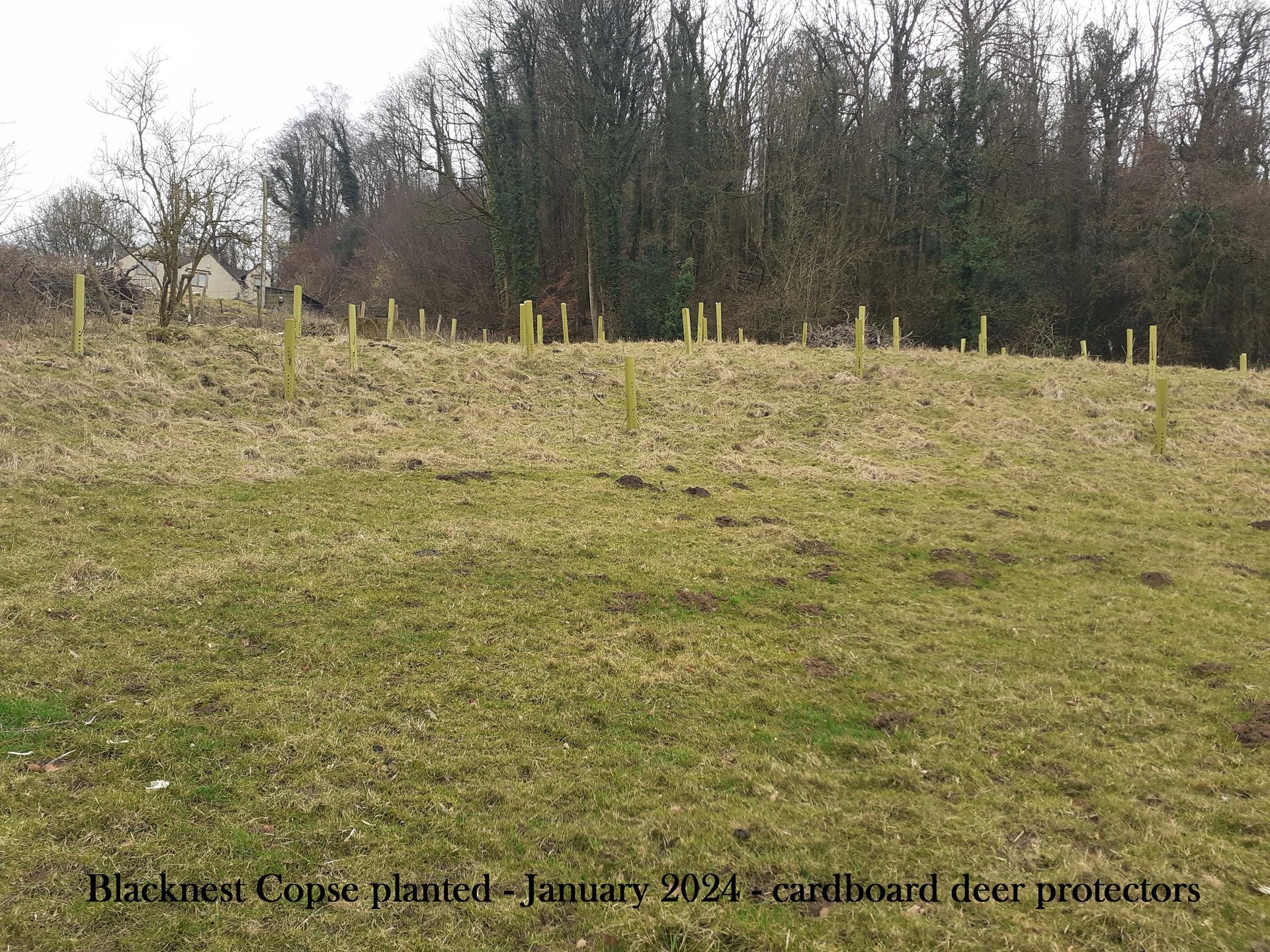
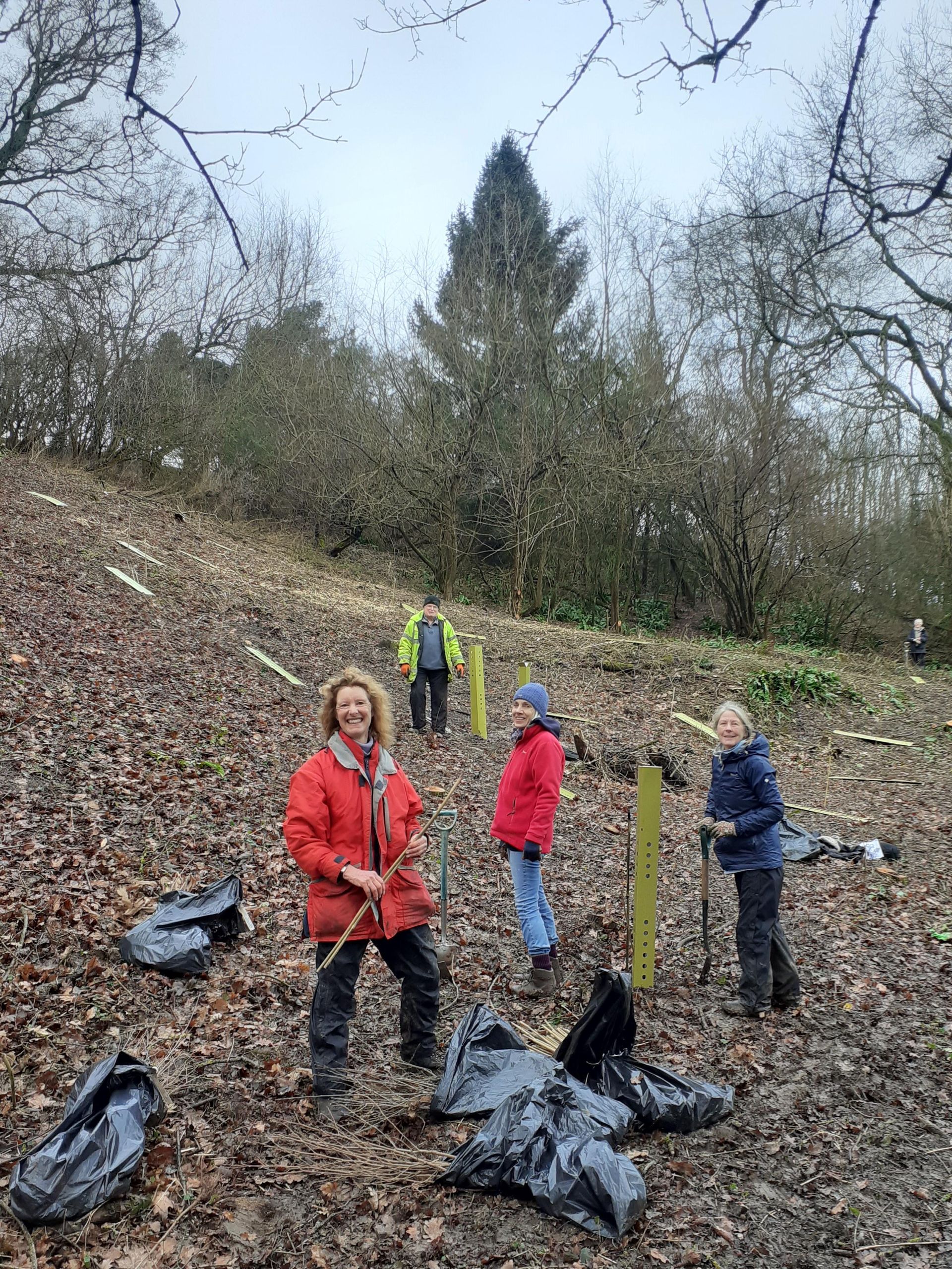
Blacknest Copse after planting (2024)
This is the text area for this paragraph. To change it, simply click and start typing.
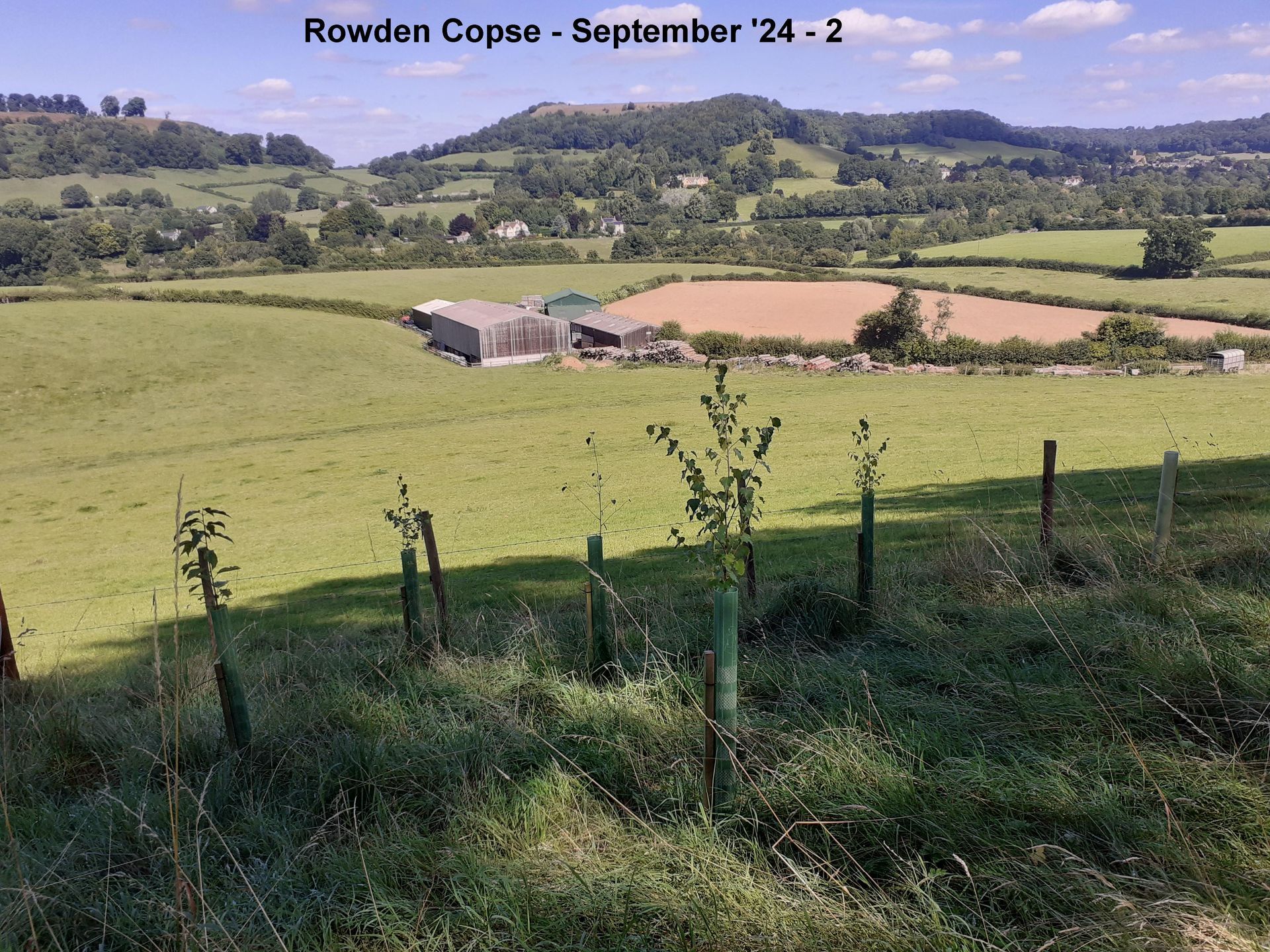
Rowden Copse after 18 months
This is the text area for this paragraph. To change it, simply click and start typing.
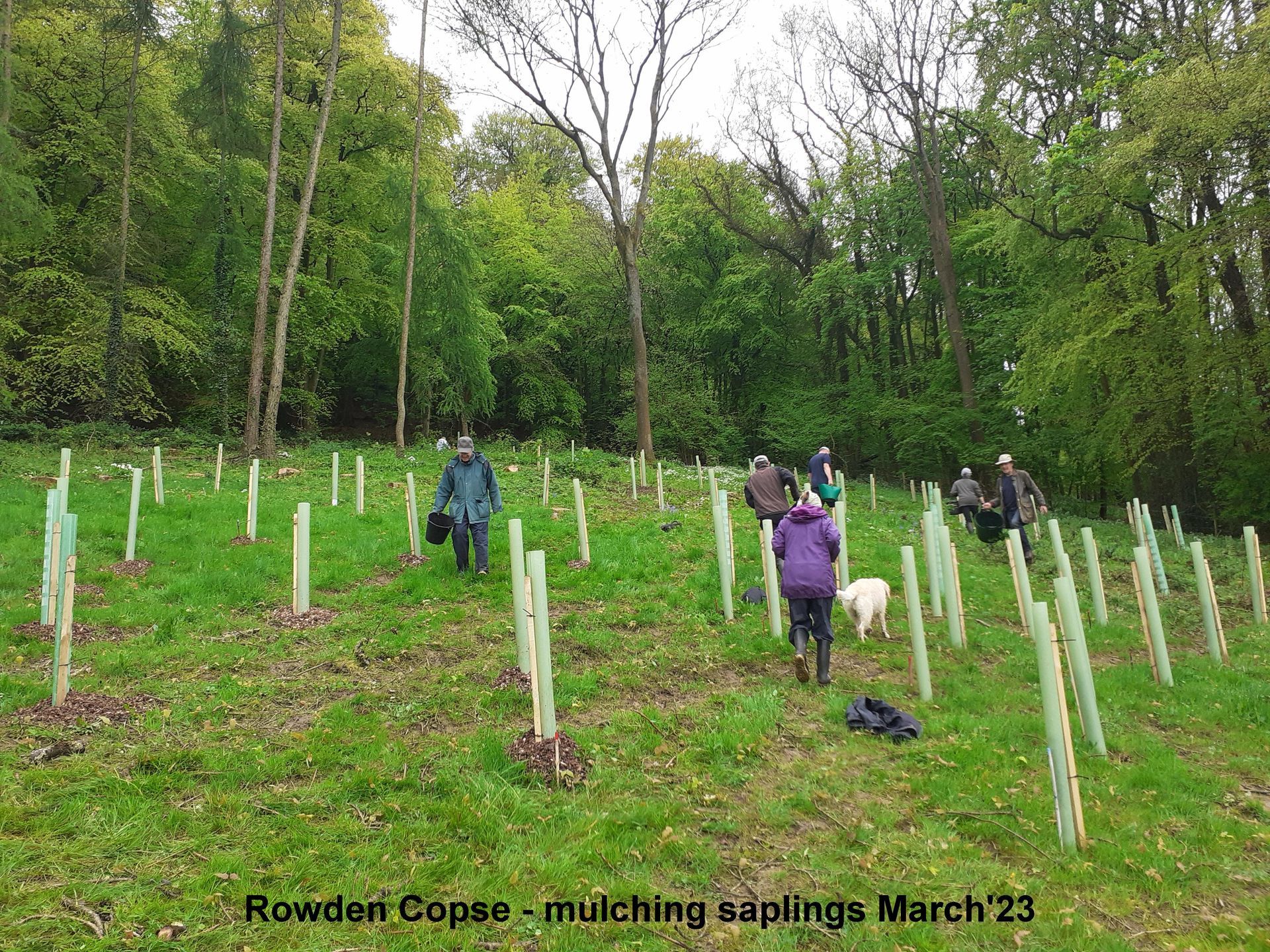
Mulching Rowden Copse March 2023
This is the text area for this paragraph. To change it, simply click and start typing.
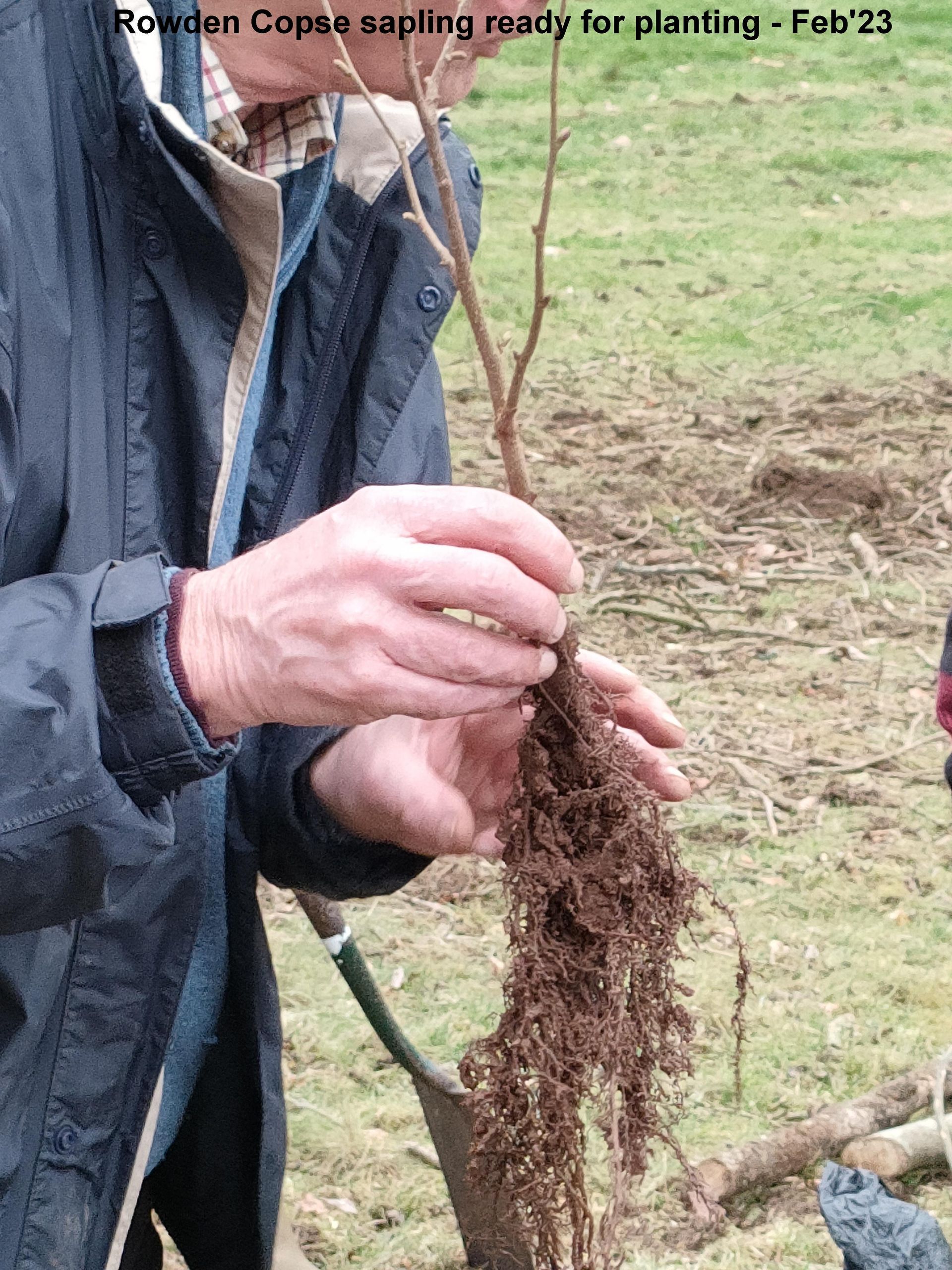
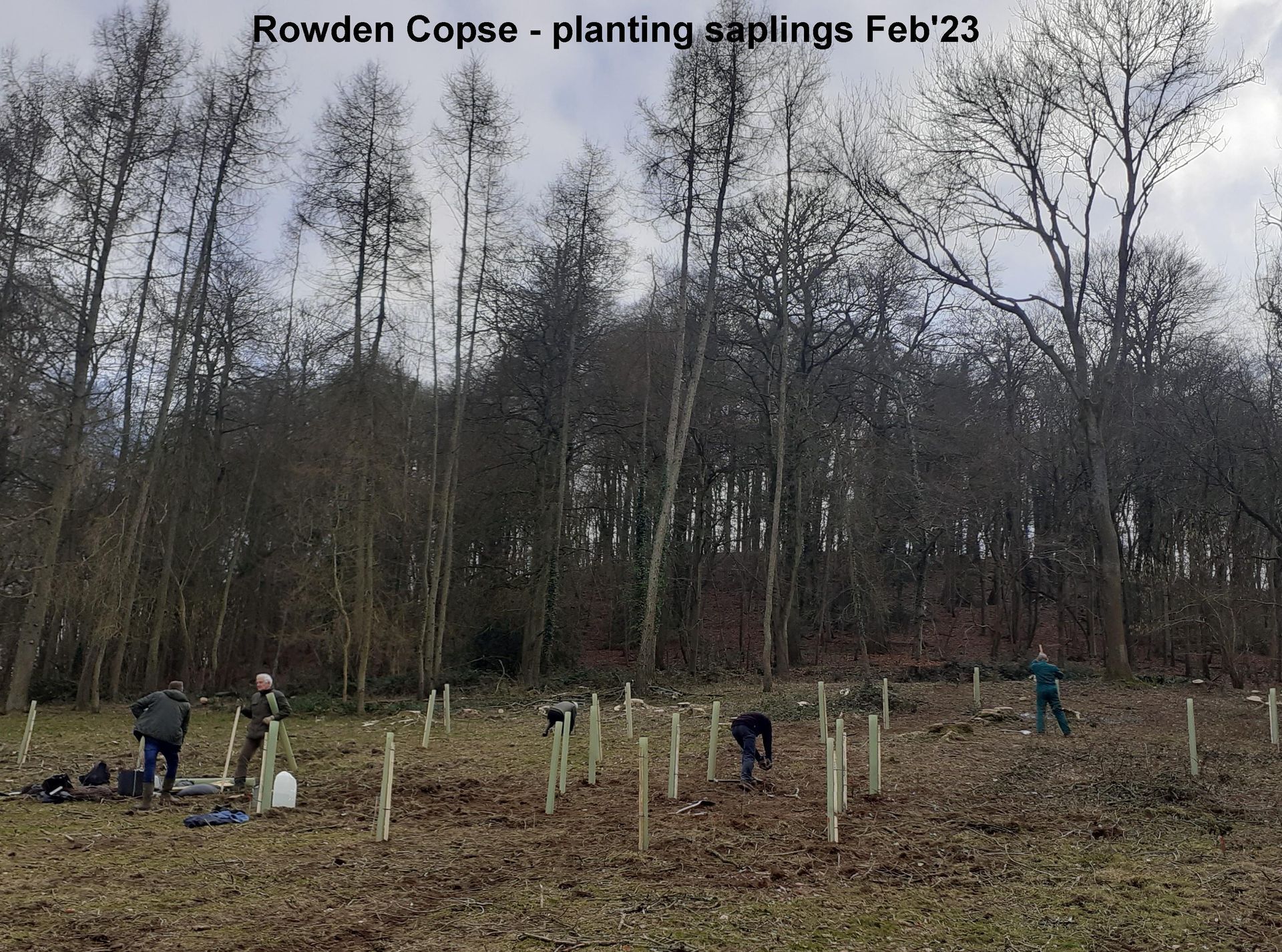
Biodiversity Islands AND Corridors
Wildflowers and Wildlife Corridors
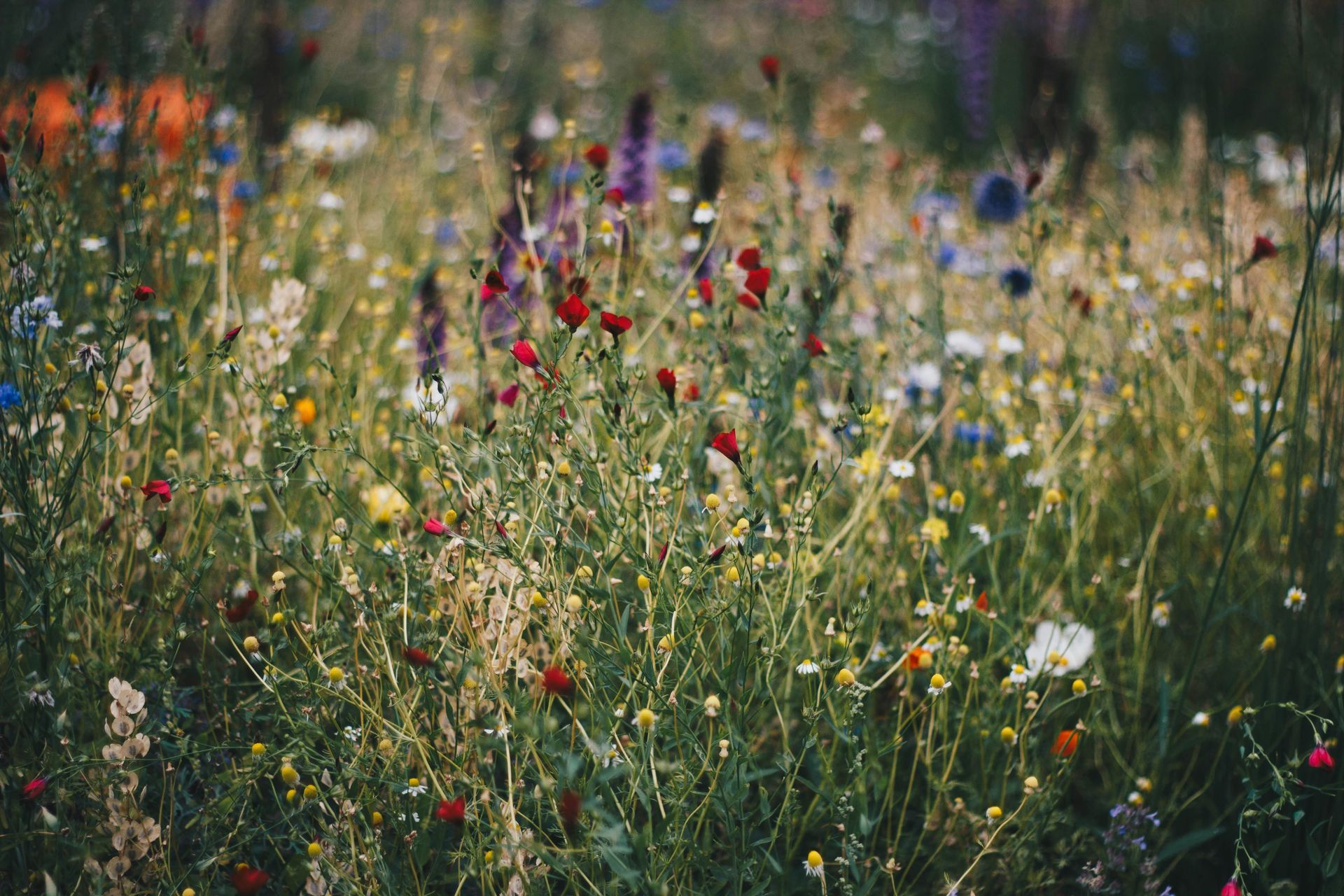
Wild flowers compete more successfully with grass if the soil fertility is poor, so management that lowers the soil fertility results in more wild flowers. Insects are more successful if island patches of wild flowers are separated by short distances, or by wild habitat such as hedgerow, so there is a linking 'corridor' of nature.
In support of the Uley Parish Council Biodiversity Policy, adopted in February '24, four 'islands' have begun to be managed to promote the growth of wild flowers.
Two small patches are within the village, where nearby residents have volunteered to take responsibility for their management (consistent with pedestrians' safety, dogs fowling avoidance, and maintaining clear road visibility for vehicles):
1. Next to the Uley Shop
2. Above Sheeps Pool
Two larger areas, identified as ''unimproved limestone grassland'' by the ecologist from Cotswold Glorious Grasslands, Lorna Baggett, when she conducted a survey (so especially suitable for wild flowering):
3. The area known as Uley Common
4. The bank on the Millennium Green
(with the support of the Millennium Green Committee).
Uley Common (West Hill Common)
This small remnant of a once much larger Common is the triangular area next to the field just north of Hetty Pegler's Tump.
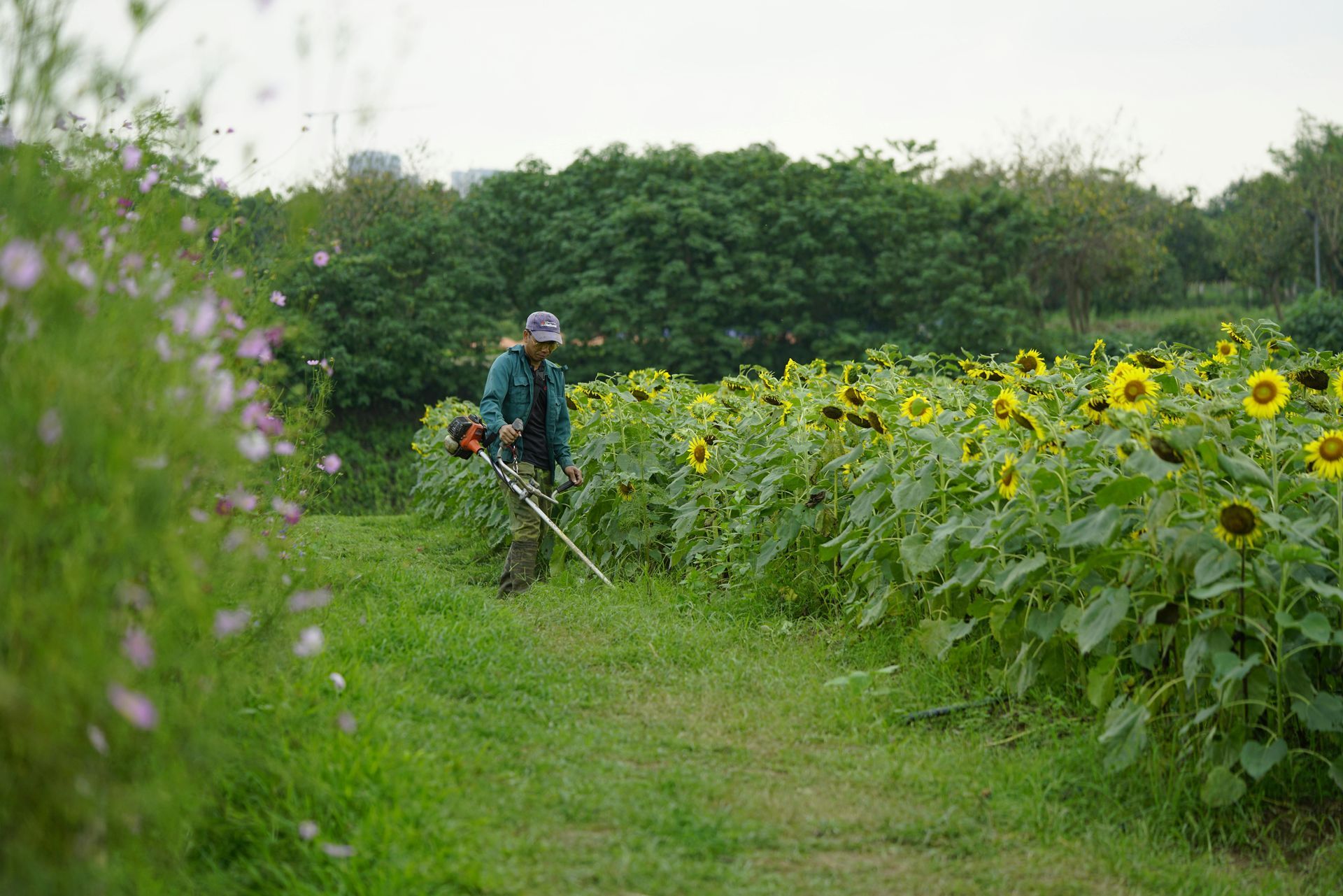
Uley Common has been brushcut by volunteers during several mornings in November '24, and the cuttings raked into a brash pile along one edge (which also becomes a useful habitat).
Millennium Green Bank
Lorna Baggett's report of the wildflower species she observed on this bank during her survey is here.
On a day in April '24 six volunteers brushcut a part of the bank, and then raked the cuttings off the area into brash pile lower down the field. Further brushcuts and raking have been done during December '24, January '25, and March '26.
St Giles Upper Churchyard
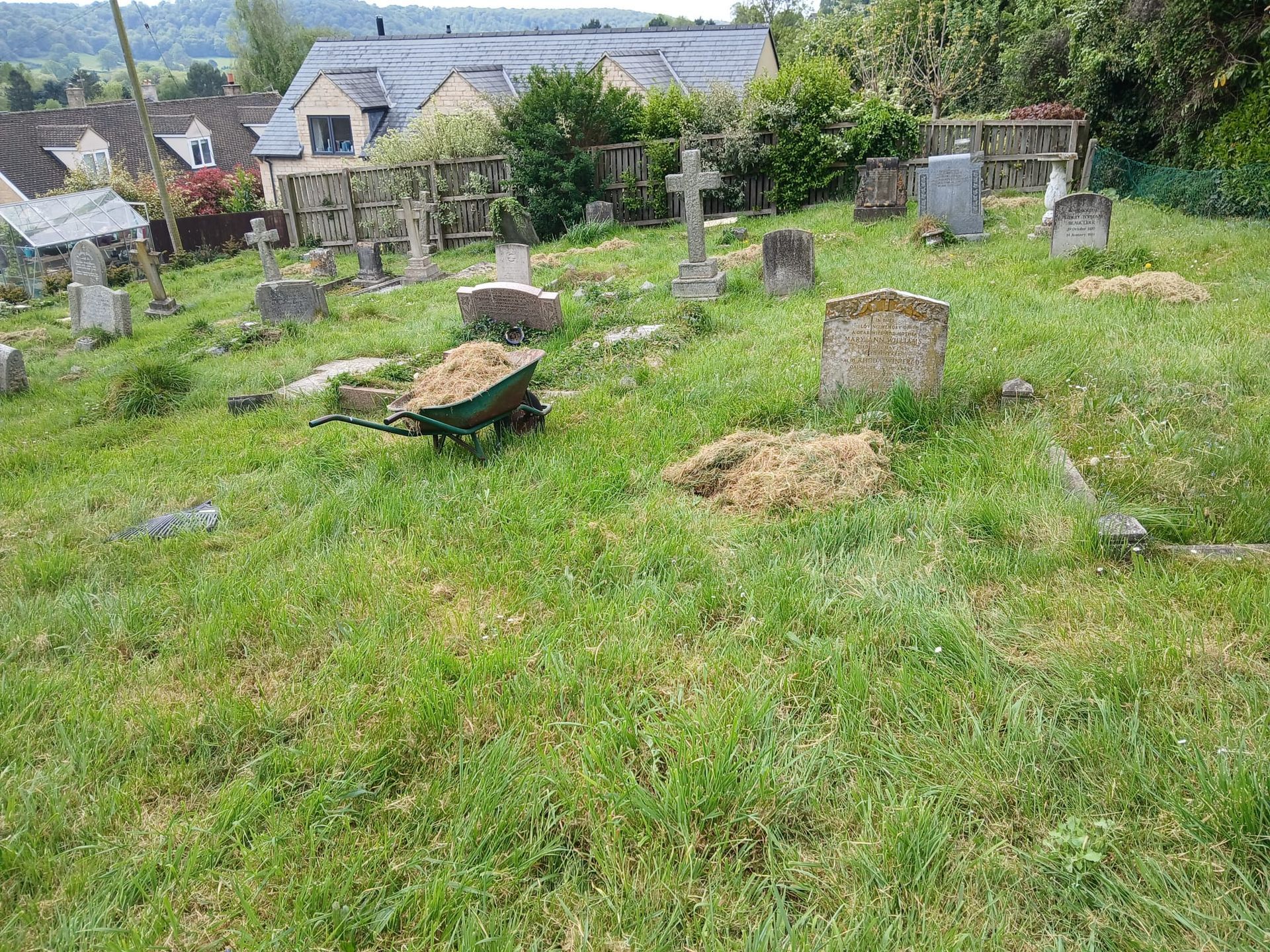
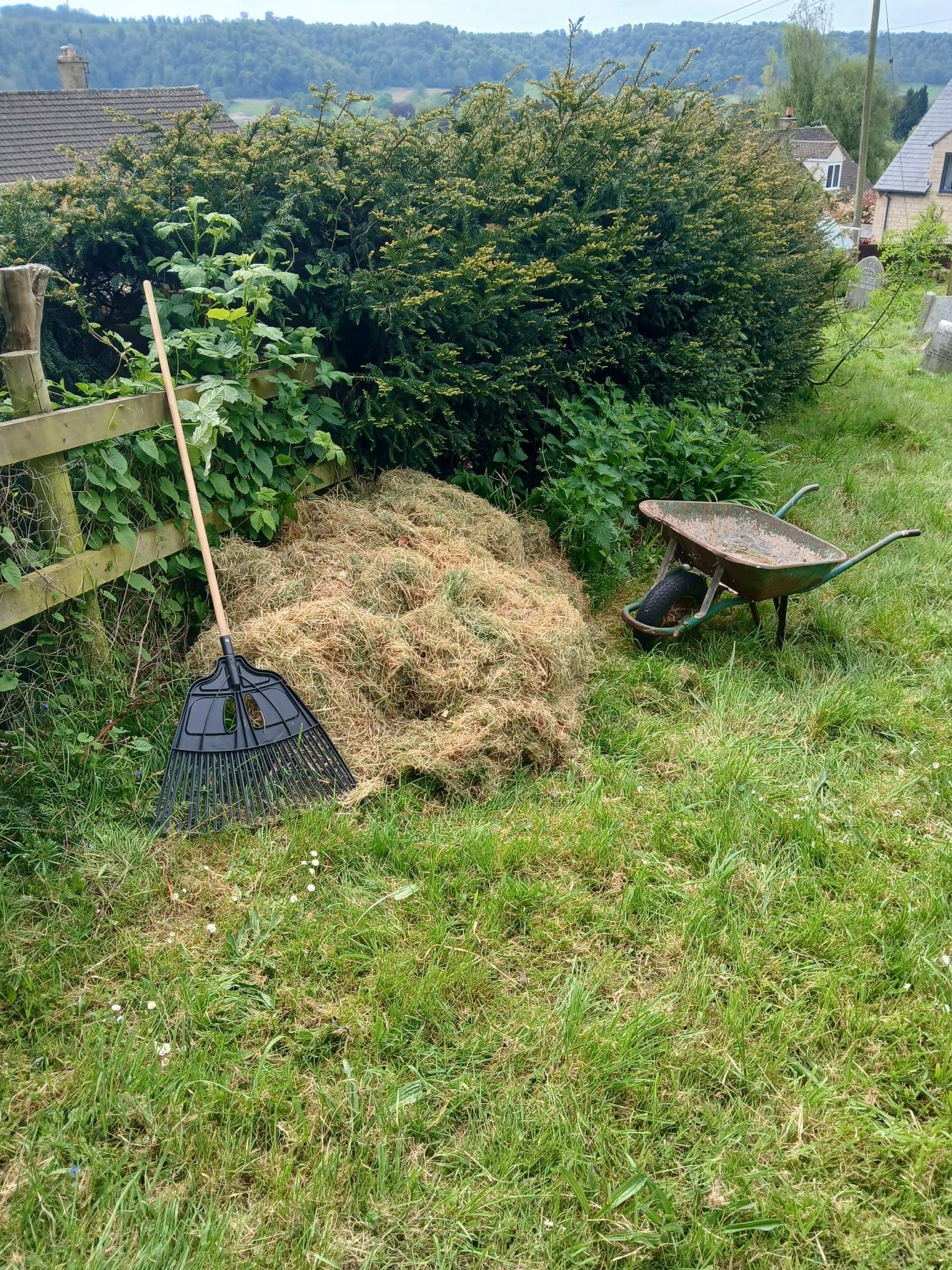
April 2026 - Strim and Rake management begun in part of St Giles Churchyard in Uley, to lower the fertility of the ground - weakens the dominating grasses which enhances the wild flowers.
A pile of cut grass is a favoured habitat for the slow-worms.
MAPPING NATURE CORRIDORS
A map showing the areas in Uley that are being deliberately managed to support nature and the environment - wild flowers, trees, and the pollinators and other fauna that they support - is active. The map below shows where useful nature corridors already exist; and the gaps where the corridors need improvement.
KEY - Map is coloured to show who manages each area
Uley Trees & Meadows volunteers
Villagers
Others (eg Gloucestershire Wildlfe Trust)
One way to fill the gaps is for the community to contribute by making part of their gardens 'wildlife friendly'.
Is your garden Wildlife Friendly?
Q1. Is there a part of your garden in which you actively try to encourage wildlife to thrive?
This could be anything from a few square metres, to the entire garden, however large or small).
Q2. Do you try to limit how much weedkiller or pesticide you use in your garden?
Q3. Finally, how many of the following do you do?
- Mow the lawn less frequently and/or on a higher setting
- Do anything specifically to encourage pollinators
- Have a pond
- Regularly leave food out for birds/mammals
- Delay cutting back plants until after they have gone to seed
- Have a compost heap
- Improve the condition of your soil, or generally adopt organic approaches
- Grow wild flowers in part of the garden
- Encourage hedgehogs or other small mammals
- Leave dead wood in piles to provide shelter and food for insects
If you've answered Yes to Q1 and Q2, and have ticked at least 4 activities at Q3, you're a Wildlife Gardener!
If not, then give it a go - cutting out weedkiller entirely can be really tricky, but the more you cut back the more wildlife will flourish. And the more activities at Q3 you can do, the more wildlife will love you for it. It's not difficult to make it happen, and when you do, your garden will take on a new dimension!
Remember, one step at a time is all you need to do, and even the tiniest gardens will benefit from it.
Get the kids involved, and chat to your neighbours about what you're doing - that way, we can connect the village through wildlife.
If you would like your garden to be added to 'the Nature Corridors map' then contact us by clicking the button below and we will add your garden to the map - and thank you.
Hedgerows
Hedgerows
Hedges weakened by annual flail cutting revive and thicken up if they are laid manually by traditional methods. One UTM volunteer attended a Tree Council online course during summer '24, and after it, a practical hedge-laying day. The Tree Council (the organisation that manages 'trees outside woodlands', in parallel with the Forestry Commission which manages 'trees within woodlands') has a national project to restore hedgerows. Thousands of miles of hedgerows have been lost since the end of WW2, and also weakened by annual flail-cutting. If restored and improved, they provide invaluable habitat for birds, small mammals, insects, and still smaller organisms - those creatures which have disappeared in such large numbers causing the nature loss crisis. Thriving hedges usually have borders either side of grass and wild flowers, which together with the hedge itself are excellent biodiverse habitat.
A useful local project could be to:
- do a local hedgerows baseline survey;
- replant hedgerows that have been lost (it is legal to plant a hedge where one can be shown on earlier maps to have existed before, but not otherwise);
- carry out traditional hedge-laying on weakened hedges or parts of hedges (which promotes low-level bushy growth from the ground up).
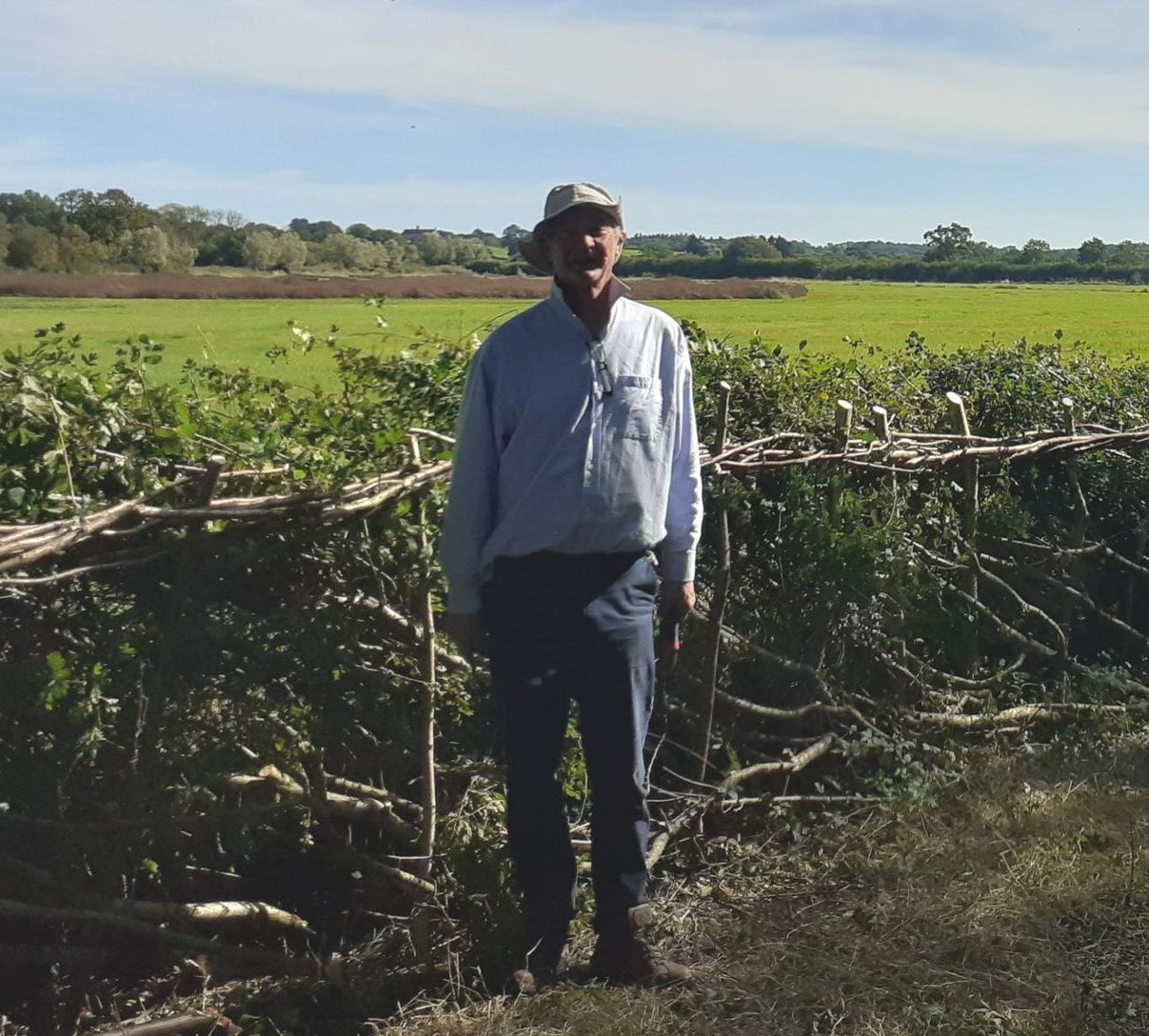
In the same way that three copses were planted by UTM volunteers in '23 and '24 (sourcing saplings and guards from Gloucester County Council) the hope is to plant some hedge during winter '24/25, and to strengthen by manual hedge-laying weakened sections of existing hedges.